
Serving the Greater Boston & Greater Worcester areas
Pregnancy & Perinatal Chiropractic Care
At The Foundation Chiropractic, our neurologically-focused Gonstead chiropractic care is designed to support women through every stage of pregnancy. During this season of rapid physical, hormonal, and neurological change, proper spinal and pelvic alignment plays a critical role in supporting nervous system function, reducing stress on the body, improving comfort and mobility.
Why pregnancy and chiropractic belong together
At The Foundation Chiropractic, perinatal care is not simply about managing discomfort or positioning a baby. It is about supporting the structural integrity and nervous system function that allow a mother’s body to adapt, heal, and thrive — before birth, through it, and after it.
Dr. Mirandola provides neurologically-focused Gonstead chiropractic care for women throughout every stage of the perinatal journey. His care includes Webster Technique certification for pregnant patients and extends far beyond it, addressing the full spectrum of structural and neurological demands that pregnancy and postpartum place on the body.

More than just Pain relief
Pregnancy and postpartum are among the most neurologically demanding seasons of a woman's life
Pregnancy and the postpartum period are some of the most physically, emotionally, and neurologically demanding seasons in a woman’s life.
While the focus is often placed on the baby’s development, many women are navigating profound changes within their own body and nervous system simultaneously. Hormonal shifts, postural changes, physical stress, emotional overwhelm, sleep disruption, and the demands of preparing for and caring for a new baby all place significant stress on the body.
At The Foundation Chiropractic, we believe the perinatal period deserves a deeper level of support—one that looks beyond discomfort alone and focuses on the function of the nervous system as the foundation for both maternal and infant health.
Because during pregnancy and postpartum, it’s not just about bones, muscles, or pain. It’s about adaptability.
The three stressors — why the nervous system becomes overwhelmed
Physical Stress
Emotional Stress
Chemical Stress
The Perinatal Demand on the Body
During pregnancy, the nervous system is working constantly to adapt to rapid physical and chemical changes while simultaneously supporting the growth and development of another human being.
When stress accumulates faster than the body can adapt, the nervous system can become overwhelmed and less resilient.
This often shows up as:
- Low back or pelvic pain
- Neck and shoulder tension
- Difficulty sleeping
- Increased stress sensitivity
- Fatigue
- Sciatic discomfort
- Headaches
- Low back or pelvic pain
- Neck and shoulder tension
- Difficulty sleeping
- Increased stress sensitivity
- Fatigue
- Sciatic discomfort
- Headaches
The relaxin factor
Why Spinal and Pelvic Function matter during Pregnancy
Relaxin, the hormone responsible for softening the ligaments that hold the pelvis together, begins circulating from the first trimester and peaks in the first 14 weeks of pregnancy. Its purpose is to prepare the pelvis for delivery but its effect extends to every joint in the body, including the sacroiliac joints, the symphysis pubis, and the lumbar facet joints that support the spine.
When these joints are moving under the influence of relaxin without the structural alignment the pelvis requires, the result is not just pain. It is a pelvis that is working harder to compensate — pulling on the uterine ligaments, creating asymmetry in the uterine space, and potentially influencing the baby’s ability to move freely into the optimal position for birth.
Restoring pelvic alignment during this window when the body is most responsive to correction and most in need of support is precisely what chiropractic care during pregnancy is designed to do.
of Pregnant women
of women receiving Webster Technique Care
of pregnancies involve breech
the condition Webster Technique most commonly addresses

The maternal-infant nervous system connection
Mother and Baby
The state of a mother’s nervous system directly shapes the environment a baby develops within and birth itself places significant physical demands on a newborn’s spine and nervous system.
When a mother’s body remains stuck in chronic stress physiology — often described as “fight or flight” mode — it can affect sleep, recovery, hormonal balance, and the body’s overall capacity to adapt. This matters not only for the mother’s experience during pregnancy, but for the environment in which her baby is developing as the baby is learning and preparing for the world it will soon enter being taught through mom’s neurological state.
Supporting nervous system regulation throughout pregnancy may help the body shift from a chronic survival state into a more balanced, regulated one. That shift benefits both the mother and the baby she is carrying.
This is why our perinatal care is not simply about the pregnancy. It is about the entire family that begins with it.
- Improved ease of nursing and latching in the newborn
- Better sleep regulation for both baby and mother
- Reduced colic and digestive discomfort
- Calmer, more settled infant behavior
- Faster postpartum recovery for the mother
- Greater resilience and emotional regulation in the early postpartum weeks
Full perinatal care
Perinatal Care through Every Stage
Our care does not begin when the discomfort starts. It begins whenever you are ready and continues as long as you need it.

Pre-Conception Care
planning for pregnancy
For women planning a pregnancy, establishing pelvic balance and optimal nervous system function before conception is meaningful and often overlooked. The nervous system governs the hormonal signals that regulate ovulation, implantation, and early fetal development. Structural interference in the lumbar, spine, and sacrum can create subtle disruptions in this signaling that are rarely considered in conventional fertility workups.
Many women who have struggled with fertility challenges and begin chiropractic care find it easier to concieve. We make no guarantees — fertility is complex and multifactorial — but we offer what conventional medicine often does not: an assessment of the structural nervous system component that may be contributing.

First trimester
Weeks 1–13
Chiropractic care is safe from the first weeks of pregnancy and most beneficial when begun early. The first trimester is when relaxin begins circulating, when the center of gravity begins to shift, and when the structural changes of pregnancy first start placing new demands on the spine and pelvis.
Beginning care early means correcting structural imbalances before the body has had months to compensate around them — which generally means faster results and less discomfort throughout the second and third trimesters. Mothers who begin care in the first trimester typically report a significantly more comfortable pregnancy overall.

Second trimester
Weeks 14–26
The second trimester is the most common entry point for mothers seeking chiropractic care during pregnancy. The baby’s growth accelerates, postural demands increase, and the low back pain, round ligament discomfort, and sciatic symptoms that affect so many pregnant women begin to emerge more clearly.
Webster Technique care is fully appropriate and particularly valuable during the second trimester — establishing pelvic balance at the stage when the baby is growing most rapidly and the uterine space is expanding to accommodate that growth. Regular adjustments during this period support both maternal comfort and optimal fetal positioning as the third trimester approaches.

Third trimester
Weeks 27–40+
The third trimester is when the stakes of pelvic alignment are highest. The baby is now large enough that its position in the uterus is directly related to pelvic symmetry and the window for repositioning from breech or transverse presentation narrows as delivery approaches.
Webster Technique care in the third trimester focuses on maintaining the sacral alignment and uterine ligament balance that allow the baby maximum freedom to move into the optimal vertex (head-down) position. Many of our most urgent cases arrive in the final four to six weeks mothers who have received a breech presentation diagnosis and are seeking a non-invasive approach before decisions about cesarean delivery need to be made.

Postpartum recovery
After delivery
The postpartum period is one of the most structurally demanding transitions the human body undergoes. Delivery places significant mechanical stress on the pelvis, sacrum, and lumbar spine. The relaxin that allowed the pelvis to open for birth continues circulating in breastfeeding mothers for months postpartum, leaving the joints vulnerable long after the obvious demands of pregnancy have ended.
Postpartum chiropractic care supports the re-stabilization of the pelvis, addresses structural patterns created by nursing posture and carrying, and helps mothers return to full function without the chronic low back, hip, and sacroiliac pain that many accept as an unavoidable consequence of having given birth.
Webster Technique — certified care
What is the Webster Technique and why does it matter for your pregnancy?
Definition — Webster Technique
The Webster Technique is a specific chiropractic sacral analysis and diversified adjustment protocol developed by Dr. Larry Webster, founder of the International Chiropractic Pediatric Association (ICPA).
It is designed to detect and correct sacral subluxation and associated dysfunction of the sacroiliac joints in pregnant patients — with the goal of reducing the effects of pelvic imbalance on the uterine environment and supporting optimal fetal positioning.
What the Webster Technique is — and is not
An important distinction: The Webster Technique is not a procedure that manually repositions a breech baby. It does not involve any direct contact with the baby or the uterus. It is a chiropractic analysis and adjustment of the mother’s sacrum and pelvis — and of the ligaments that attach the uterus to the pelvis.
What it does is this: by restoring balance and symmetry to the pelvis, it removes the uterine constraint and asymmetry that can restrict the baby’s freedom of movement. When that constraint is removed, many babies — with the innate drive to seek the optimal position for birth — naturally move into the vertex (head-down) position on their own.
What to expect during a Webster Technique adjustment.
Assessment: Dr. Mirandola evaluates the position and mobility of the sacrum, the symmetry of the iliac crests, and the tension pattern of the uterine supporting ligaments — specifically the round ligaments, which frequently develop asymmetric tension in the presence of sacral subluxation.
The sacral adjustment: A gentle, specific correction is applied to the sacrum to restore normal alignment and mobility to the sacroiliac joints. The pregnant patient is positioned comfortably — typically side-lying or on a specialized pregnancy table — so that no pressure is placed on the abdomen at any point.
Soft tissue release: Gentle release of the round ligaments and surrounding musculature is performed to reduce the tension that may be restricting uterine space and contributing to asymmetric uterine positioning.
The entire visit is comfortable, non-invasive, and adapted entirely to the pregnant body. Most mothers find the experience deeply relaxing.
If your baby is in a breech or transverse position.
We regularly hear from mothers who are 38 weeks pregnant, scheduled for a cesarean in one week, and hoping for a miracle. We understand why — a breech diagnosis is frightening, options feel limited, and the Webster Technique is often the first thing a search returns.
Restoring pelvic balance through Webster Technique care creates the structural conditions in which a baby that has the freedom to move frequently will reposition. A 2002 study published in the Journal of Manipulative and Physiological Therapeutics found an 82% rate of successful vertex presentation in 112 Webster Technique cases.
The earlier in the third trimester care begins, the more time the baby has to respond. A mother at 34 weeks has meaningfully more opportunity than a mother at 38 weeks with a cesarean already scheduled. We will always do everything we can for every patient who comes to us — but we will not promise outcomes we cannot guarantee, and we would rather a mother come to us at 20 weeks than at 38.
If you have received a breech or transverse diagnosis, please call us as soon as possible. Beginning care earlier in pregnancy is one of the best decisions you can make.
Certified pregnancy Chiropractic Care
Dr. Mirandola is certified in the Webster Technique through the ICPA.
Pregnancy discomfort is common but not inevitable
Conditions commonly addressed in Pregnancy
Many of the physical challenges of pregnancy have a neuro-structural component that chiropractic care can directly address. The conditions below are not treated symptomatically. We identify the structural imbalance contributing to each challenge and correct it at the source, allowing the body to function as designed throughout pregnancy and beyond.
Structural / musculoskeletal conditions
- Carpal tunnel syndrome
- Hip pain
- Low back pain
- Mid-back / rib pain
- Neck & shoulder pain
- Pelvic pain / SPD
- Pubic symphysis pain
- Round ligament pain
- Sacroiliac joint pain
- Sciatica
Physiological & positioning concerns
- Breech presentation
- Digestive disruption
- Fertility challenges
- Headaches
- Posterior positioning
- Postpartum recovery
- Reflux / heartburn
- Sleep disruption
- Transverse presentation
- Uterine constraint
Safety & what to expect
Is chiropractic care safe during pregnancy?
Yes — when provided by a trained practitioner using techniques adapted for the pregnant body. Prenatal chiropractic care has been practiced safely for decades and is recognized as a low-risk intervention for musculoskeletal conditions in pregnancy by the American Pregnancy Association. At The Foundation Chiropractic, every aspect of a pregnant patient’s care is adapted to the specific needs, stage, and physiology of pregnancy.
How care is adapted for pregnancy
Several modifications distinguish prenatal chiropractic care from standard adult care
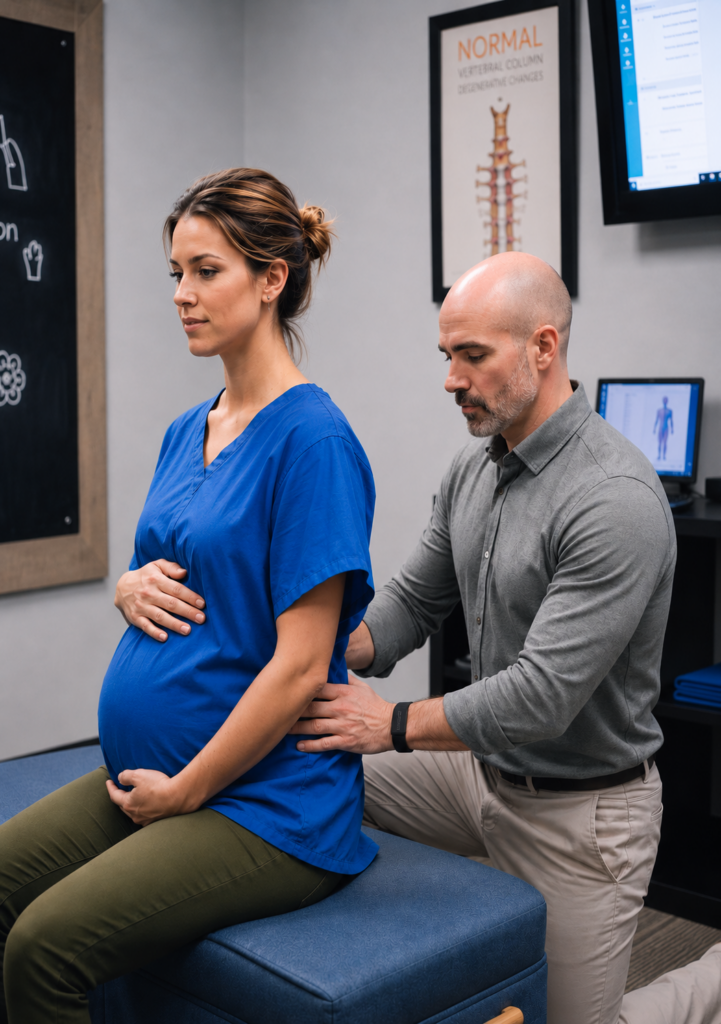
01
Examination and Reexamination
Because our Neuro-Structural Examination as a whole is non-invasive, an examination and re-examination on a pregnant mother is very similar to that of someone who is not pregnant. The main difference is that spinal X-rays are not performed at this point in care to protect the growing baby.
02
Positioning
Our chiropractic office uses tables that adjust for a growing woman’s belly, such as the knee-chest table (all-fours position) and while lying prone, a nesting pregnancy pillow is used to gently cradle and take all pressure off mom’s abdominal area.
03
Pressure and technique
The force applied to all adjustments is carefully moderated throughout pregnancy, accounting for the increased joint mobility caused by relaxin.
04
Abdominal Contact is Extremely Gentle & Very Intentional
Common Concern
What the evidence and our practice show
Is it safe in the first trimester?
Yes. Chiropractic care is safe from the earliest weeks of pregnancy. Many practitioners recommend beginning care in the first trimester to establish pelvic balance before structural compensations develop.
Is it safe near my due date?
Yes. Care continues safely through the final weeks of pregnancy. Many mothers receive adjustments in the days immediately before labor — with reports of reduced labor duration and improved comfort during delivery.
Do I need my OB's permission?
Not required, but communication with your obstetric provider is encouraged. Dr. Mirandola is happy to coordinate with your OB or midwife. Chiropractic and obstetric care complement each other well.
What does a prenatal adjustment feel like?
Most pregnant patients describe the experience as comfortable and relieving — particularly in the low back and hips. The side-lying position is generally more comfortable than any position maintained for a prolonged period during late pregnancy.
faqs
Frequently Asked Questions
When should I start chiropractic care during pregnancy?
The earlier, the better. The ideal time to start prenatal chiropractic care is in the first trimester, before the structural compensations of pregnancy become entrenched. That said, we see mothers at every stage — including in the final weeks — and there is almost always meaningful benefit available regardless of when care begins. If you have a specific concern such as a breech presentation or significant pain, please contact us promptly rather than waiting for a more “convenient” time.
What is the success rate of the Webster Technique for breech babies?
The most cited study — Pistolese, published in the Journal of Manipulative and Physiological Therapeutics in 2002 — reviewed 112 cases of breech presentation in which Webster Technique care was used and found an 82% rate of successful vertex (head-down) presentation prior to delivery. It is important to note this is an observational study, not a randomized controlled trial, and that babies sometimes turn spontaneously without intervention. What the Webster Technique does is remove the pelvic constraint that may be preventing the baby from turning — the baby’s own movement does the rest. The earlier in the third trimester care begins, the more time the baby has to respond.
How often will I need to come in during pregnancy?
Visit frequency is determined by your individual examination findings and changes with each trimester. Many mothers who begin care in the first trimester start with weekly or bi-weekly visits, transitioning to more frequent care in the third trimester as birth preparation becomes the focus. Mothers beginning care specifically for breech presentation typically begin with more frequent visits to allow enough time for the pelvis to respond. Dr. Mirandola will present a specific, personalized care plan at your Review of Results appointment.
Can chiropractic care help induce or speed up labor?
How much does prenatal chiropractic care cost?
Can I continue chiropractic care after giving birth?
Absolutely — and we strongly encourage it. The postpartum period is one of the most structurally demanding transitions the body undergoes. Delivery places significant force on the pelvis and sacrum, and the relaxin that allows the pelvis to open for birth continues circulating in breastfeeding mothers for months afterward. Postpartum chiropractic care supports recovery, re-stabilizes the pelvis, and addresses the structural challenges of the fourth trimester — including the new postural demands of nursing, carrying, and new parenthood — with the same precision and attention we bring to every stage of perinatal care.