
Serving the Greater Boston & Greater Worcester areas
Chiropractic Care for Athletes
You train your muscles. You train your mind. Most athletes never address the system that coordinates both — until something goes wrong. The Foundation Chiropractic provides Gonstead Method chiropractic care for active athletes seeking a structural performance edge, and for former athletes managing the cumulative structural damage that years of competition leave behind.
The System Most Athletes Ignore
Addressing underlying issues
The structural performance connection
What structural misalignment actually costs an athlete
A subluxation — a structural misalignment in the spine that creates interference in nerve signaling — does not just produce pain at the site of the problem. It creates a cascade of compensatory patterns throughout the kinetic chain.
When the pelvis is not level, the hip flexors on one side shorten to compensate. When the lumbar spine shifts, the thoracic spine rotates to counterbalance. When the cervical spine is restricted, the proprioceptive signals that govern balance and coordination are altered. These are not hypothetical effects. They are measurable biomechanical realities that affect ground contact time, stride symmetry, force production, and injury risk — in every sport, at every level.
The Gonstead Method identifies exactly where these structural disruptions originate. Not where the compensation is happening — where it started.
reduction in injury
NFL teams employ team chiropractors
making chiropractic care standard practice at the highest level of professional sport
professional & Olympic athletes use chiropractic care
According to the American Chiropractic Association

Active Athletes vs. Former Athletes
Two kinds of athletes. One level of care.
Whether you are still competing or carrying the body that did — we built this for you.
Active Athletes
For those who are still competing — and want to compete without a ceiling.
You train with intention. You recover with discipline. You measure everything you can measure — and you still have the sense that something is not quite right. A movement pattern that does not feel clean. A side that is always tighter than the other. A nagging injury that responds to treatment but keeps coming back.
These are structural signals, not training failures.
Active athletes under Gonstead chiropractic care report improvements in movement quality, range of motion, recovery speed, and the ability to train at higher volumes without the cumulative structural breakdown that derails athletic careers. The athletes who benefit most are those who understand that structural integrity is not a wellness concept — it is a performance variable.
We work with runners, cyclists, CrossFit athletes, golfers, swimmers, martial artists, team sport players, and any athlete serious enough to care about every advantage that is actually available to them.
Former Athletes
The state of health a former athlete has today is the perfect culmination of all the physical stress and training they embodied in their past years.
The accumulated structural load of years of sport does not announce itself all at once. It builds. The shoulder that was “managed” through a season. The back injury that was treated symptomatically and never fully resolved. The knee that has been compensated around for so long that the hip above it and the ankle below it have both developed their own problems.
Former athletes are among the most under-served patients in musculoskeletal care.
They are often told that their pain is simply the cost of having competed — that arthritis, chronic joint pain, and recurring back problems are inevitable consequences of athletic careers. We disagree.
What most former athletes have never received is a comprehensive structural assessment that maps exactly what happened, what has been compensated around it, and where the original source of dysfunction actually is. That is precisely what the Gonstead five-criteria analysis provides — and it is frequently the first time in a former athlete’s life that anyone has looked at their structural health with this level of specificity.
Every sport. One level of precision.
The structural demands of your sport are specific. Your care should be too.
Each sport creates distinct patterns of structural stress. Understanding where those patterns originate and how to correct them without disrupting the compensations the body has built around them requires more than a generic adjustment.

Running & Endurance
Every asymmetry in pelvic alignment, leg length, or spinal rotation is amplified across thousands of repetitions per run. Runners are particularly susceptible to IT band syndrome, patellofemoral pain, plantar fasciitis, sacroiliac joint dysfunction, and low back pain — all of which trace back to structural imbalance rather than the structures where the pain presents.
The Greater Boston area is home to one of the most active running communities in the country — and The Foundation Chiropractic’s Wellesley location sits in the heart of it. Runners from across the region regularly drive to our offices specifically because this level of structural analysis is not available closer to home.
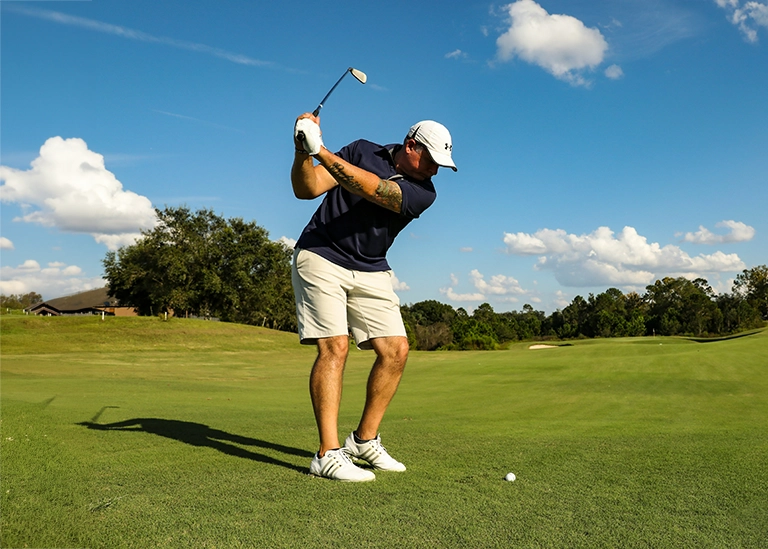
Golf
The golf swing is one of the most biomechanically demanding rotational movements in sport — generating significant torque through the lumbar spine, thoracic spine, and pelvis in a fraction of a second. Even minor restrictions in spinal rotation create compensatory movement patterns that reduce power, compromise accuracy, and over time produce the chronic back and hip pain that ends so many golfers’ playing careers earlier than necessary.
Golfers are among the most motivated patients we see because the improvement in their game is often immediate, objective, and undeniable. The Wellesley demographic includes a significant golfing population for whom this care is a direct performance investment.

Rowing

Crossfit & Functional Fitness
CrossFit athletes load the spine under compressive and shear forces that expose structural weaknesses immediately. A lumbar misalignment that is inconsequential in daily life becomes a limiting factor — and an injury risk — under a heavy deadlift, clean, or overhead press. CrossFit athletes benefit from both the corrective and the preventive dimensions of Gonstead care: correcting existing structural issues and establishing the structural resilience that allows high training volumes to continue without systematic breakdown.

Swimming & Overhead Sports
Swimmers, tennis players, baseball players, and volleyball athletes all place repetitive overhead demand on a cervical and thoracic spine that is rarely assessed structurally. Thoracic outlet syndrome, shoulder impingement, cervical disc issues, and rotator cuff problems all have structural spinal components that are consistently overlooked when these athletes are evaluated by orthopedic or physical therapy providers focused exclusively on the presenting joint rather than the structural origin of dysfunction.

Cycling
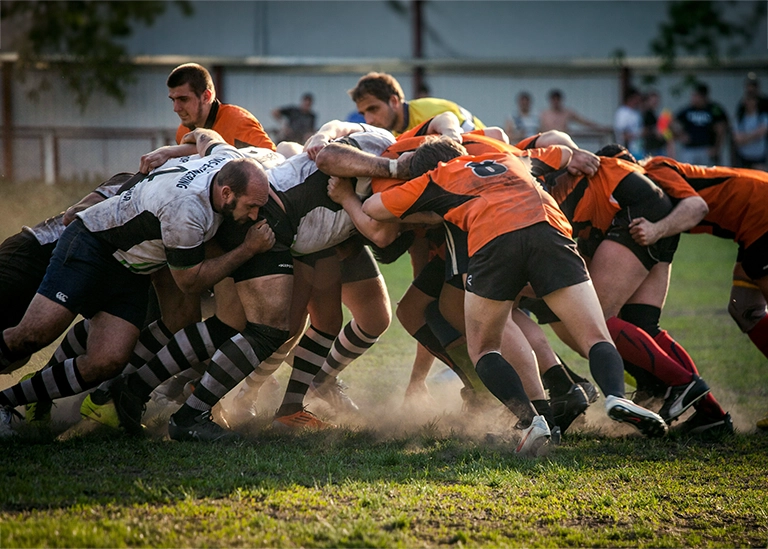
Team Sports & Contact Athletes
Football, hockey, lacrosse, soccer, martial arts, and rugby athletes absorb impacts throughout their careers that create micro-structural changes in the spine that are rarely assessed until they produce symptoms significant enough to interrupt training. By that point, the compensatory patterns built around them have often been present for years. The Gonstead five-criteria analysis provides a structural assessment comprehensive enough to identify what has been building quietly — and specific enough to correct it precisely.
The Gonstead difference
What the Gonstead Method delivers for athletes
The Gonstead Method is not one option among many in Dr. Mirandola’s practice. It is the only approach he uses — because for athletes specifically, the precision it demands is inseparable from the results it produces. A general adjustment applied to an approximated location can provide temporary relief. A Gonstead-specific correction applied to the exact segment, produces structural change that the body builds on rather than compensates around
Movement Quality
Restoring structural symmetry removes the compensatory movement patterns that reduce efficiency, power output, and precision across every athletic movement. Athletes commonly report immediate improvements in range of motion and movement quality following Gonstead care.
Recovery speed
A nervous system free of structural interference regulates tissue repair, inflammation response, and adaptation to training load more efficiently. Athletes under consistent chiropractic care consistently report faster recovery between training sessions and competitions.
Injury prevention
Structural asymmetry is one of the most reliable predictors of overuse injury. By identifying and correcting the structural imbalances that create uneven load distribution across joints, Gonstead care reduces the conditions in which overuse injuries develop — before they require time away from training.
Athletic longevity
The athletes who compete and train the longest are not always the most genetically gifted. They are the ones who manage their structural health with the same discipline they bring to their training. Consistent Gonstead care is one of the most direct investments an athlete can make in how long their body performs at a high level.
Aspect
General Chiropractic
Gonstead Method (The Foundation Chiropractic)
Analysis depth
General assessment — symptom location and basic range of motion testing
Five-criteria systematic analysis — Nervoscope, palpation (static and motion), full-spine X-ray, visualization — at every visit
Correction specificity
Broad spinal mobilization — often multiple segments adjusted per visit
Single-segment, directionally precise correction targeting the exact structural source — never more than what the analysis indicates
Kinetic chain assessment
Typically focused on the area of complaint
Full-spine analysis identifies compensatory patterns throughout the chain — not just where symptoms present
X-ray use
Often optional — used primarily for injury assessment
Full-spine standing X-rays as standard — provides the structural map that guides every correction and tracks structural change over time
Relevance for athletes
Appropriate for general wellness and symptom management
The level of structural specificity that athletic performance and recovery demands — identifies the root source, not the symptomatic location
Finding the source of the injury that keeps coming back
Conditions commonly addressed in Athletes
Athletes often arrive after years of managing recurring injuries with rest, physical therapy, cortisone injections, or surgery — each providing temporary relief without addressing the structural origin of why the injury keeps returning. The Gonstead five-criteria analysis is specifically designed to find what those approaches typically miss: the precise spinal or pelvic misalignment that is creating the mechanical environment in which certain injuries are inevitable.
Structural injuries & chronic conditions
- Ankle instability
- Carpal tunnel syndrome
- Cervical disc issues
- Disc injury / herniation
- Hip impingement (FAI)
- IT band syndrome
- Low back pain
- Rotator cuff dysfunction
- Sacroiliac joint pain
- Sciatica
- Shoulder impingement
- Thoracic outlet syndrome
Performance & recovery concerns
- Compensation patterns in gait or movement
- Headaches post-impact
- Movement asymmetry
- Nerve pain / numbness
- Overuse injury patterns
- Old injuries never fully resolved
- Persistent tightness / tension
- Post-surgical structural assessment
- Reduced range of motion
- Sleep disruption affecting recovery
- Slow recovery
- Training plateau
faqs
Frequently Asked Questions
Does chiropractic care actually help with athletic performance — or is it just for pain relief?
Both — but the performance question is the more interesting one. Research published in peer-reviewed journals has documented improvements in grip strength, muscle strength, range of motion, reaction time, and proprioception following chiropractic adjustment in athletes. These are not pain relief outcomes. They are measurable performance metrics. The mechanism is nervous system function — when structural interference is removed from the nervous system’s communication pathways, the speed and efficiency of motor signaling improves. For athletes, this translates to cleaner movement patterns, faster reaction, and better proprioceptive feedback — the subtle sensory information that governs balance, coordination, and the body’s ability to self-correct mid-movement.
How is chiropractic different from physical therapy for athletes?
Physical therapy and chiropractic care are complementary, not competing — and many athletes benefit from both. The meaningful difference is what each discipline primarily addresses. Physical therapy focuses on strengthening and rehabilitating the muscles, tendons, and soft tissues surrounding a joint. Chiropractic care — specifically the Gonstead Method — focuses on the structural integrity of the spine and pelvis and the nervous system function that those structures govern.
A useful analogy: strengthening a muscle group around a structurally misaligned joint is like installing new tires on a car with a bent axle. The tires will wear unevenly regardless of their quality. Correcting the structural source — the axle — changes what the rehabilitation work builds on. Athletes who combine Gonstead structural correction with appropriate physical therapy typically find that their rehabilitation work produces more lasting results.
How often should an athlete see a chiropractor?
It depends entirely on the individual case — and we will never give you a generic schedule before seeing your examination findings. Athletes in a corrective phase — addressing an identified structural issue — typically come in more frequently at the start and taper as the correction stabilizes, usually over a period of weeks to a few months. Dr. Mirandola presents a specific, personalized care plan at the Review of Results appointment not a protocol based on what other athletes have done.
Can chiropractic care help with muscle tightness and recovery after training?
Yes — though not in the way most athletes expect. Persistent muscle tightness is rarely a muscle problem. Muscles that are chronically tight around a joint are typically protecting that joint from a structural instability they have detected — either a misalignment in the spine that is altering neurological output to that muscle group, or a joint instability that the surrounding musculature is bracing for. Stretching and massage can temporarily relieve the tightness, but as long as the structural cause remains, the muscle will return to the protective state the nervous system is demanding. Correcting the structural source — the reason the muscle is being recruited to protect — is what allows it to genuinely relax and recover.
I had surgery for a sports injury. Can chiropractic care still help me?
What does the first visit for an athlete look like?
The new patient process for athletes follows the same three-step structure as all The Foundation Chiropractic patients — and this is intentional.
Step one is an online Case Review with Dr. Mirandola — a conversation about your sport, your history, the injuries you have managed, and what you are hoping to achieve through care.
Step two is the in-office Neuro-Structural Examination — a comprehensive 10–16 point assessment including full-spine digital X-rays taken in the weight-bearing, standing position, Gonstead instrumentation, static and motion palpation, and neurological testing.
Step three is the Review of Results — where Dr. Mirandola walks through exactly what was found, what it means for your structural and athletic health, and the care plan he recommends. The entire new patient experience is $315.