
Serving the Greater Boston & Greater Worcester areas
Pediatric Chiropractic Care
Pediatric chiropractic care is safe, gentle, and appropriate for children of all ages — including newborns. The techniques used for infants and young children require only light fingertip pressure, far less than what most parents expect. At The Foundation Chiropractic, all pediatric care is delivered using Gonstead Method principles adapted to the child’s age, size, and stage of development.
What most parents don't know
The nervous system is the first system to develop in utero — and it governs every other system from the moment a child is born. Growth, immunity, digestion, sleep, focus, behavior, mood, and coordination are all regulated by nervous system function. When structural interference is present in a child’s developing spine, the effects may not present as obvious pain. They often appear as recurring ear infections, difficulty sleeping, digestive irregularities, behavioral challenges, developmental delays, or a general sense that something is just slightly off.
These are not unrelated problems. They are often different expressions of the same underlying issue — and they are exactly the kind of thing a thorough Gonstead examination is designed to find.
The Overlooked Reality
The birth process — why it matters
Why should newborns see a chiropractor?
The birth process — even in uncomplicated vaginal deliveries — involves significant compressive and tensile forces on a newborn’s cervical spine and cranium. Studies have documented that the forces involved in routine delivery can be substantial enough to create minor subluxations in the upper cervical spine that, left unaddressed, may interfere with normal nervous system function in the weeks and months that follow.
This is not a reason for alarm. It is a reason for examination. A brief, gentle Gonstead assessment in the first days or weeks of a child’s life can identify whether any structural correction is needed — and in many cases, a single gentle adjustment is all that is required. In others, the examination simply confirms that the spine is developing as it should, and the peace of mind that provides is itself valuable.
of Newborns
of newborns show signs of nerve stress in the upper cervical spine following delivery
Routine Pediatrician Visits
assess spinal or nervous system structural integrity
Day old
The age at which a child can safely receive a Gonstead chiropractic assessment
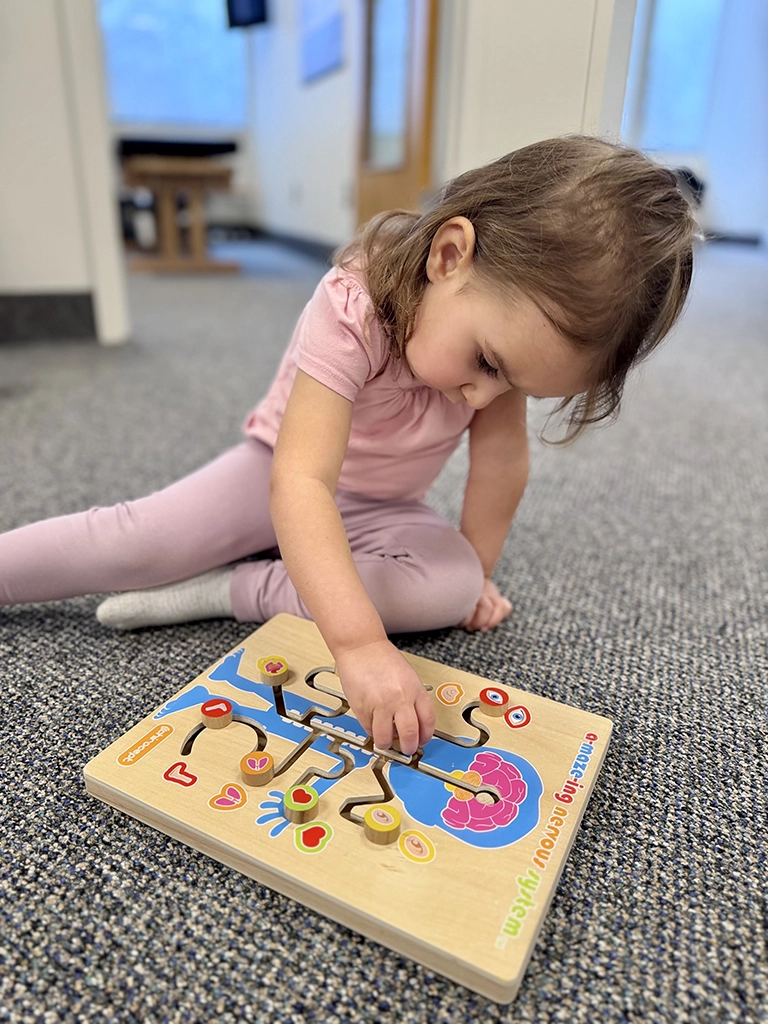

Childhood is not gentle on the spine and most of the effects go unexamined
Beyond the birth process, the years of childhood introduce a steady accumulation of structural stress that most parents never think of as a health concern:
The first falls — from the crib, from the bike, from the playground. The hours of sitting at a desk with posture that was never corrected. The heavy backpacks that alter the natural curves of a still-developing spine. The sports impacts. The screen time. The growth spurts that place sudden new demands on a musculoskeletal system that is changing faster than the body can always adapt to.
None of these events are catastrophic on their own. But the cumulative structural effect — unexamined and uncorrected — can set the patterns that follow a child into adulthood.
Your child's nervous system is developing right now. Give it the best possible foundation.
Using the precision of the Gonstead Method, Dr. Mirandola evaluates the neurological integrity of your child’s spine and nervous system — identifying interference that may be affecting their health, development, and quality of life in ways that are easy to miss and difficult to reverse without care.
Your child's nervous system is developing right now. Give it the best possible foundation.
Using the precision of the Gonstead Method, Dr. Mirandola evaluates the neurological integrity of your child’s spine and nervous system — identifying interference that may be affecting their health, development, and quality of life in ways that are easy to miss and difficult to reverse without care.
From birth through adolescence
Care by Age and Stage
There’s no single type of child or teen we care for. Some are dealing with pain or discomfort. Some are active and doing well but know they could feel or perform even better. Some have been told that what they’re experiencing is “just part of growing up” or “they will grow out of it”— but they and their families are looking for more answers and support. What they share is a desire to help each child feel, move, and thrive at their very best.

Newborns
0–3 months
Newborn assessments use light fingertip pressure — no more force than you would use to test the ripeness of a tomato. The focus is the upper cervical spine and cranial base, where birth-related stress most commonly presents. Corrections at this stage are immediate, precise, and typically require very few visits.
Common indicators for a newborn assessment include difficulty latching or nursing, preference for turning the head to one side, irritability without clear cause, and colic.

Infants & toddlers
3 months – 4 years
This is the stage of falls, first steps, and the physical exploration that defines early childhood. It is also the stage of recurrent ear infections, digestive disruption, sleep difficulties, and immune challenges — conditions that parents often manage symptomatically for years without addressing the structural nervous system component that may be contributing to them.
Adjustments at this age are adapted to small, developing bodies — light, specific, and entirely safe.

School-age children
5–12 years
School-age children face a combination of postural demands (desks, devices, backpacks), physical activity, and the emotional stresses that are inseparable from development at this stage. ADHD, learning difficulties, recurring headaches, growing pains, and sleep disruption are all commonly reported at this age — and all have documented connections to nervous system function.
This is also the window when scoliosis screening becomes relevant, and when structural patterns established in early childhood begin to solidify if uncorrected.

Teenagers
13–17 years
Adolescence brings rapid growth that can exacerbate existing structural issues, often for the first time producing symptoms significant enough that a teenager notices them independently. Sports injuries, chronic headaches, postural deterioration from device use, anxiety, and sleep disruption are all common presentations in our teenage patients.
Teenagers are also often the most motivated patients once they understand what care involves — because they feel the difference immediately and can articulate it clearly.
From birth through adolescence
Conditions Commonly Addressed in Children
- ADHD
- Allergies
- Anxiety in children
- Asthma
- Behavioral challenges
- Colic
- Ear infections
- General wellness checks
- Growing pains
- Headaches
- Immune deficiencies
- Learning difficulties
- Neurological development
- Nursing difficulties
- Postural issues
- Reflux / GERD
- Scoliosis
- Sleep difficulties
- Sports injuries
- Torticollis
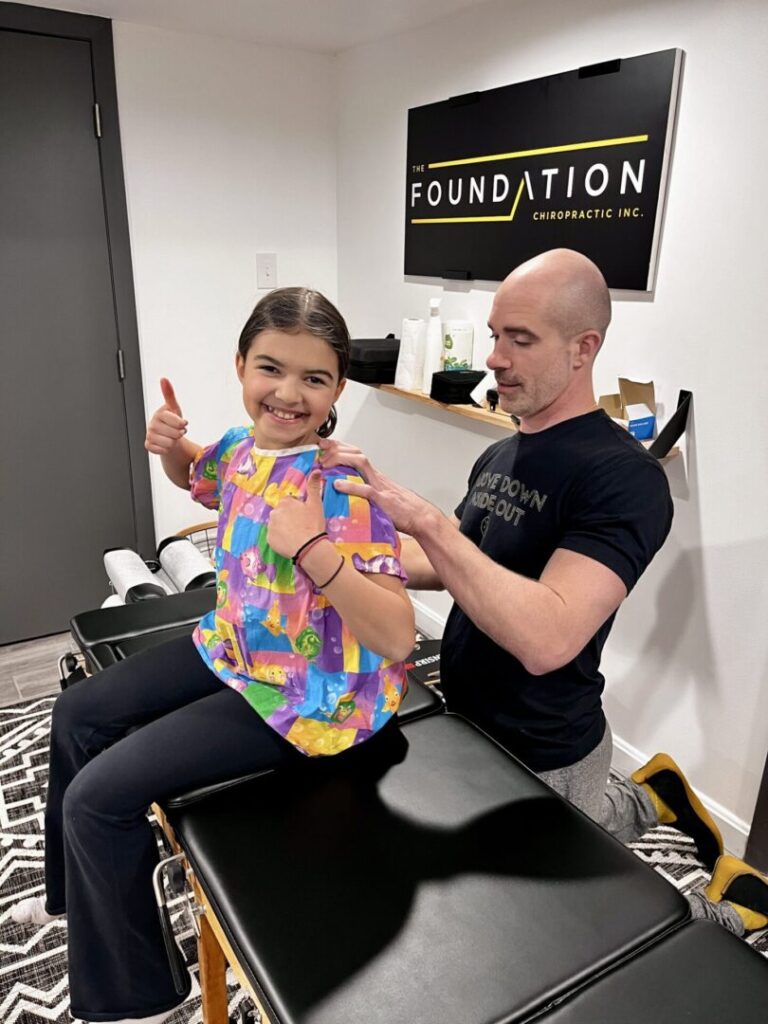
What to expect
A pediatric adjustment at The Foundation Chiropractic looks nothing like what most parents imagine.
The most common thing parents say after their child’s first visit is some version of: “I had no idea it would be that gentle.” Pediatric chiropractic adjustments — particularly for infants and young children — bear no resemblance to adult adjustments. There is no cracking. There is no force. There is no discomfort.
For newborns and infants, the correction involves nothing more than the sustained, gentle pressure of a fingertip — approximately the weight of a coin — applied to the precise segment identified in the assessment. Older children receive slightly more pressure, scaled carefully to their size, weight, and tissue development.
Assessment
The Gonstead examination — adapted for children
Dr. Mirandola performs the same non-invasive neurological testing and five-criteria Gonstead analysis used for adult patients — modified entirely for the pediatric body. Instrumentation, palpation, and visualization are adapted to the size, development stage, and temperament of the child. For very young children, the examination is conducted in a position that feels natural and comfortable — often in a parent’s arms.
Full-spine X-rays are taken only when clinically indicated — typically for older children and teenagers — and never as a routine procedure for infants or young children.
The Adjustment
Precision without force
Pediatric adjustments are performed with techniques scaled to the child’s physiology. For infants, this means fingertip pressure applied with controlled, sustained contact — not a thrust. For toddlers and school-age children, the pressure increases slightly but remains well within the tolerance of a developing musculoskeletal system. For teenagers, adjustments begin to resemble adult care more closely, though still delivered with the specificity and measured force the Gonstead Method demands.
Most children remain calm and relaxed during their adjustment, and many fall asleep shortly after their visit.
After Care
What to watch for
Children typically respond to chiropractic care faster than adults. Their nervous systems are more plastic and their compensatory patterns are less entrenched. Many parents notice changes in their child’s sleep, digestion, or behavior within the first few visits.
Dr. Mirandola will outline the expected care plan for your child at the Review of Results appointment — including how many visits are anticipated, what changes to watch for, and how you can support your child’s progress between visits.
faqs
Frequently Asked Questions
Why should a newborn see a chiropractor?
The birth process — even in uncomplicated deliveries — places measurable compressive force on the newborn’s cervical spine. Research by German physician Gutmann (1987) found that approximately 80% of infants examined shortly after birth showed signs of stress or restriction in the upper cervical region. A gentle Gonstead assessment identifies whether any structural correction is needed. When it is, the adjustment requires only light fingertip pressure and typically produces immediate improvement in the infant’s comfort, nursing ability, and sleep quality. When no correction is needed, the examination confirms that the spine is developing as it should — which is itself a valuable piece of information for a new parent.
What age can a child start chiropractic care?
How much does pediatric chiropractic care cost?
The New Patient Experience — which includes the Case Review, Neuro-Structural Examination, and Review of Results — is $175 for children. Ongoing care fees are presented at the Review of Results appointment, based on your child’s individual findings and care plan. We do not present fees before we understand your child’s case, and we are always transparent about cost before any care commitment is made. We accept HSA and FSA health savings accounts and can provide an itemized receipt for insurance reimbursement if you have out-of-network chiropractic benefits.
How often will my child need to come in?
The frequency of care depends entirely on what the examination finds. A child with a minor, recent structural issue may require only a few visits. A child with longstanding patterns that have developed over several years may require a more extended corrective period. Dr. Mirandola presents a specific, personalized care plan at the Review of Results appointment — including the expected number and frequency of visits — before any care begins. Many families choose to continue with periodic wellness visits after the corrective phase is complete, to ensure the spine continues to develop well as their child grows.