
The diaphragm is innervated by the phrenic nerve (C3–C5) — cervical in origin. The bronchial tubes and lungs receive nerve supply from T1–T6. Structural dysfunction in either the cervical or upper thoracic spine can compromise the neurological control of breathing mechanics and airway reactivity.
Serving the Greater Boston & Greater Worcester areas
Conditions We Help
Back pain. Headaches. Sciatica. Digestive issues. Fertility challenges. They look entirely different — and they often share the same source.
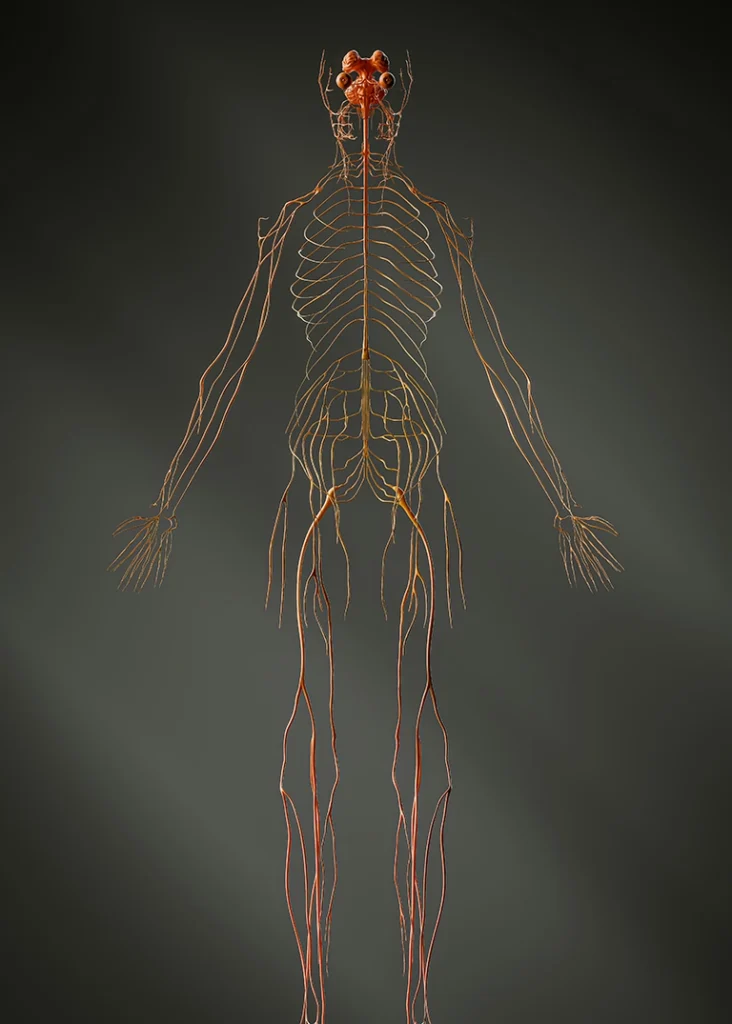
The Common Source of all Chiropractic Conditions
Most people associate chiropractic care with back and neck pain. Those are among the most common reasons people first walk through our door — but they are rarely the root cause, and almost never the only thing we address. The nervous system governs every other system in the body, structural interference in the spine can produce symptoms in places that seem entirely unrelated.
At The Foundation Chiropractic we addresses both structural conditions and physiological conditions connected to nervous system dysfunction, such as headaches, migraines, digestive issues, hormonal imbalance, anxiety, sleep disruption, and fertility challenges..
How We work with the Nervous System
Using the Gonstead Method, we identify and correct the structural source of nervous system interference, allowing the body to restore normal function across multiple systems simultaneously.
One system. Every function.
The spine is not just structural support. It's the primary system that runs everything else.
The nervous system — housed and protected by the spine and pelvis — is the master communication network of the human body. It governs digestion, immune response, hormonal signaling, cardiovascular function, sleep regulation, and every other process that keeps the body in balance.
When structural shifts in the spine create interference in this network, the effects are not limited to the area where the shift occurs. They cascade outward into whichever systems depend most on the affected nerve pathways — producing symptoms in locations that can seem to have nothing to do with the spine at all.
This is not a chiropractic theory. It is the anatomy of the nervous system — and it is why correcting a single structural misalignment sometimes resolves challenges in multiple areas of the body simultaneously.
A useful analogy
Think of the nervous system as your body's electrical wiring.
When there is a short circuit in the walls of a building, the rooms that lose power are not where the problem is — they are where the problem shows up. Fixing the lights in each room individually does not solve the wiring issue. Finding the short circuit does.
The symptom — wherever it appears — is not the source. It is the signal. Our job is to find the short circuit and correct it at its origin. When that happens, the lights come back on across the whole building.
0
mil
Americans experience low back pain
the most common reason adults seek chiropractic care
- American Chiropractic Association
1
%
of chiropractic patients describe their care as effective
making chiropractic care standard practice at the highest level of professional sport
- Gallup‑Palmer College Report, 2021
+
1
%
clinical trials report Improvement
randomized clinical trials on spinal manipulation for back pain report clinically significant improvement
- Rubinstein et al. — BMJ, 2012
10
%
of all Care starts with the Gonstead Method
of Foundation Chiropractic care begins with the same Gonstead five‑criteria analysis — regardless of presenting condition
- The Foundation Chiropractic
A Note on Precision
The conditions on this page were not cured by chiropractic care.We want to be precise about this, because precision is the standard we hold ourselves to in everything.
What happened is this: structural interference with nervous system function was identified through the Gonstead five‑criteria examination. That interference was corrected. And the body — with the signal restored — demonstrated its own capacity to regulate, adapt, and heal.
“The recovery belongs to the body. Our role is to remove what was standing in the way of it.”
Structural conditions
Spine, Joints & Musculoskeletal Conditions
The structural conditions below involve the spine, pelvis, and the joints and tissues that depend on their alignment. In each case, our approach is the same: identify the precise structural origin of the dysfunction, correct it, and allow the surrounding tissue to respond.
Structural Conditions — Spine, Joints & Musculoskeletal
Neck pain
Cervical spine misalignment creates both local pain and referred symptoms into the shoulders, arms, and hands. The Gonstead analysis identifies the precise cervical segment involved — correcting the source rather than managing the area of complaint. One of the most common and most successfully treated presentations in our practice.
Low back pain
The most common reason adults seek chiropractic care — and among the most thoroughly researched. Lumbar and lumbosacral misalignment compresses nerve roots and alters load distribution across discs and facet joints. A 2012 BMJ meta‑analysis (Rubinstein et al.) found spinal manipulation produces clinically significant improvements comparable to conventional medical care.
Mid‑back pain
Thoracic dysfunction frequently presents as tightness, rib pain, or difficulty taking a deep breath rather than classic back pain — and is often overlooked as a result. Thoracic subluxations also affect the nerve roots supplying the digestive and cardiovascular organs.
Sciatica
Sciatica is a symptom, not a diagnosis. The radiating pain, numbness, or weakness down the leg originates from compression or irritation of the sciatic nerve — most commonly at L4, L5, or S1. A 2010 JMPT randomized controlled trial found 60% of patients with acute sciatica experienced equivalent relief from spinal manipulation as from subsequent surgery.
Disc injury / herniation
Disc herniation occurs when the outer fibrous ring of an intervertebral disc is compromised, allowing the inner nucleus to bulge or rupture and compress adjacent nerve roots. The Gonstead Method’s full‑spine standing X‑ray provides a comprehensive view of disc height, joint integrity, and the structural factors contributing to disc compromise — guiding a precise, directional correction.
Scoliosis
Chiropractic care does not reverse established scoliotic curves — but it reduces the nerve irritation associated with scoliosis, improves function of the segments involved, and in developing children and adolescents, supports the structural environment in which the spine continues to grow.
Arthritis
Osteoarthritis in the spine and peripheral joints is directly related to how load is distributed across those joints over time. Correcting structural misalignment reduces asymmetric mechanical stress — slowing the progression of arthritic change and often significantly reducing the pain and stiffness that accompany it.
TMJD
Temporomandibular joint dysfunction — jaw pain, clicking, limited opening, and associated headaches — has a direct relationship with the upper cervical spine. The muscles and nerves governing jaw function are closely linked to cervical alignment at C1–C2.
Shoulder pain
Shoulder pain is frequently driven by cervical and upper thoracic spine dysfunction rather than local shoulder pathology alone. The nerves supplying the shoulder and rotator cuff originate in the cervical spine — and cervicogenic shoulder pain is a commonly misdiagnosed condition that does not respond to local shoulder treatment.
Elbow pain
Both lateral and medial epicondylitis have cervical nerve root components that are frequently overlooked. When C5–C7 nerve roots are compressed at the cervical spine, the resulting nerve irritation can produce or perpetuate elbow pain regardless of how aggressively the elbow itself is treated.
Wrist pain / carpal tunnel
Carpal tunnel syndrome involves compression of the median nerve — but that compression commonly has a cervical origin that is missed when treatment focuses exclusively on the wrist. The double‑crush phenomenon — nerve compromise at both the cervical spine and the wrist — is common and requires addressing both sites.
Hip pain
Hip pain in adults is frequently driven by lumbosacral and sacroiliac joint dysfunction rather than the hip joint itself. The nerve roots supplying the hip originate in the lumbar spine, and pelvic imbalance creates asymmetric load across the hip joint that accelerates wear and produces pain.
Knee pain
Chronic knee pain in the absence of acute trauma is often a downstream effect of pelvic and lumbosacral misalignment creating asymmetric loading through the knee joint. Correcting the structural source changes the mechanical environment the knee is operating in.
Ankle pain
Recurrent ankle instability and chronic ankle pain frequently involve both local joint dysfunction and a lumbar nerve root component — particularly at L4–L5, which supplies the muscles and sensory fibers governing ankle stability.
Plantar fasciitis
Few patients expect a chiropractor to address plantar fasciitis — but the plantar fascia is innervated by branches of the tibial nerve, originating at L4–S3. When lumbar or sacral misalignment creates irritation in these nerve roots, the inflammatory response in the plantar fascia is often driven neurologically rather than mechanically.
Physiological conditions
Systemic & Neurological Conditions
The conditions below are the ones that most surprise new patients. They arrive for back pain and discover that the headaches they have managed for years, the digestion that has never been quite right, the sleep that never feels restorative — these are not separate problems. They are different expressions of the same structural interference in the same nervous system.
Physiological Conditions — Systemic & Neurological
ADHD
ADHD involves dysregulation of the prefrontal cortex and its connections to the limbic system — neurological pathways directly influenced by upper cervical spine function. Structural correction does not treat ADHD as a neurological diagnosis; it removes interference from the system that governs attention, impulse regulation, and emotional control.
Allergies
Allergic response is governed by the immune system — regulated in part by the autonomic nervous system through the thoracic spine (T1–T6). Structural interference at this level can dysregulate immune signaling, contributing to heightened or inappropriate allergic responses to environmental and food triggers.
Anxiety
The autonomic nervous system — which governs the stress response — communicates through the spinal cord. Structural interference, particularly in the cervical and upper thoracic spine, can chronically dysregulate the balance between sympathetic and parasympathetic tone. Restoring structural balance supports the body’s ability to regulate its own stress response.
Asthma
The nerves supplying the bronchial tubes and lungs originate at T1–T6 in the thoracic spine. Misalignment in this region can create hyperreactivity in the smooth muscle of the airways — contributing to the bronchoconstriction pattern of asthma.
Autoimmune issues
Autoimmune conditions involve the immune system mistakenly targeting the body’s own tissues. The nervous system is the primary regulator of immune function — and the vagus nerve, which travels through the upper cervical region, is increasingly recognized as a critical mediator of immune regulation.
Chronic fatigue
Chronic fatigue that does not resolve with rest is frequently a nervous system regulation problem rather than a purely energy or adrenal issue. The spinal cord mediates the signals governing energy regulation, sleep quality, and the body’s capacity to recover from physical and cognitive demand.
Colic
One of the most immediately rewarding cases we see. Colic — inconsolable infant crying for more than three hours per day — has been consistently associated with upper cervical subluxation. A 1999 randomized controlled trial in JMPT found spinal manipulation produced significantly greater improvement in colic symptoms than dimethicone.
Digestive issues
The vagus nerve — the primary neural pathway governing digestive motility, enzyme secretion, and gut‑brain signaling — travels through the upper cervical region. Structural interference at C0–C2 can significantly disrupt digestive function. Gonstead correction has produced consistent improvements in reflux, constipation, bloating, and IBS symptom patterns.
Ear infections
Recurrent otitis media in children is directly related to eustachian tube function — governed by the musculature and nerve supply of the upper cervical spine. Structural misalignment at C1–C2 creates tension in the muscles surrounding the eustachian tube, impairing drainage and creating the fluid environment in which bacteria thrive.
Fertility challenges
The nerve roots supplying the reproductive organs originate in the lumbar and sacral spine (L1–S4). Structural interference in this region can disrupt the hormonal signaling pathways governing ovulation, implantation, and early embryonic development. Dr. Mirandola also provides Webster Technique care for pregnant patients.
Headaches & migraines
The majority of chronic headaches have a cervicogenic component originating in the upper cervical spine. The trigeminal nucleus — which processes head and face pain — receives direct input from the C1–C3 upper cervical cord. A 2016 RCT in the European Journal of Pain found spinal manipulation produced a 50% reduction in migraine days, comparable to topiramate.
Hormonal disorders
Hormonal balance is regulated by the hypothalamic‑pituitary‑adrenal (HPA) axis — a system that communicates through the spinal cord and is directly influenced by cervical and upper thoracic structural integrity. Structural interference disrupts the normal pulsatile pattern of hormone release.
Immune deficiencies
Research by Pero et al. (1991) documented that individuals under long‑term chiropractic care showed immune competence 200% greater than those not receiving chiropractic care — and 400% greater than individuals with serious disease. Structural health and immune health are deeply interconnected.
Learning disabilities
Learning difficulties — including dyslexia and processing disorders — can have neurological components related to cerebellar and brainstem function, both directly influenced by upper cervical structural integrity. Removing structural interference supports the neurological environment in which learning and processing occur.
Neurological disorders
For patients with diagnosed neurological conditions, chiropractic care addresses the structural factors that may be creating additional interference in an already‑compromised nervous system. Reducing that additional burden can support quality of life and functional capacity — without conflicting with neurological medical care.
Pregnancy & breech presentation
Dr. Mirandola is certified in the Webster Technique — a specific protocol designed for pregnant patients that addresses sacral subluxation and uterine ligament tension. By restoring pelvic balance, Webster Technique care creates the structural conditions allowing the baby maximum freedom of movement. A 2002 JMPT study found an 82% rate of successful vertex presentation in 112 cases.
Menstrual discomfort
The nerves governing uterine function originate at T10–L2 and S2–S4 in the lumbar and sacral spine. Structural misalignment in these regions can create dysregulation in uterine nerve supply — contributing to cramping, irregular cycles, and PMS symptoms that have a neurological rather than purely hormonal origin.
Reflux / GERD
Gastroesophageal reflux involves dysfunction of the lower esophageal sphincter, regulated by the vagus nerve and its connections through the upper cervical and thoracic spine. Structural interference affecting vagal tone can reduce LES competence and increase acid reflux — in both adults and infants.
Respiratory issues
Sleep issues
Sleep regulation is governed by the autonomic nervous system and its influence on melatonin production, cortisol rhythms, and parasympathetic activity. Chronic sympathetic overdrive — driven by structural interference that keeps the nervous system in alert — is one of the most common and most overlooked contributors to chronic sleep disruption.
Vertigo
Cervicogenic vertigo is significantly more common than most patients are told. The proprioceptive receptors in the upper cervical joints (C1–C3) contribute directly to the vestibular system’s ability to orient the body in space. When these joints are misaligned, the proprioceptive signals create a mismatch with vestibular and visual input.
faqs
Frequently Asked Questions
Have a question we have not addressed? Bring it to your case review — every conversation with Dr. Mirandola begins with the questions you arrive with.
I have a condition that is not on this list. Can chiropractic care still help me?
It depends — and the honest answer requires an examination before we can tell you. The conditions on this list are the ones we have seen most consistently improve under our care. But the underlying mechanism — structural nervous system interference and its effects on the body’s ability to self‑regulate — is not limited to these specific presentations. Schedule a case review, describe your situation to Dr. Mirandola, and let the examination findings determine what is possible. We will always be transparent about what we can and cannot offer for your specific case.
How long does it take to see improvement in my condition?
It depends on the nature and duration of the structural issue, your age and overall health, and the consistency of your care. Most patients notice meaningful change within their first two to four weeks of consistent care. Some notice changes after their first adjustment. The Review of Results appointment is where Dr. Mirandola presents the specific timeline he expects for your case — based on your X-rays and examination findings, not on average patient data.
Is chiropractic care safe?
Yes — chiropractic care is one of the safest forms of healthcare available for musculoskeletal conditions. A 2007 systematic review published in Spine concluded that the risk of serious adverse events from spinal manipulation is extremely low — estimated at fewer than 1 in 3.7 million cervical manipulations. The Gonstead Method’s precision further reduces risk by applying corrections only to the specific segments identified by five-criteria analysis — never to segments that have not been thoroughly evaluated.
Will I have to keep coming back forever?
No — though many patients choose to. There is a meaningful difference between corrective care and optimization care. Corrective care has a defined goal: identify and correct the structural source of your presenting challenges and allow the body to stabilize. Once that goal is achieved, continued care is entirely your decision. We will never recommend care beyond what your examination findings support, and we will always be transparent about where you are in your care plan.
Can chiropractic care help with a condition I have had for many years?
Often yes — though the timeline for improvement tends to be longer for longstanding conditions than for recent ones. The body builds compensatory patterns around structural dysfunction over time, and unwinding those patterns requires the nervous system to re-establish healthier regulatory habits. The duration and severity of a structural issue will always be reflected in Dr. Mirandola’s care plan recommendation — so you will have a realistic picture of what to expect before you commit to care.
New Patient Experience · Wellesley & Worcester, MA
Ready to find the source NOT just treat the symptom?
Your care begins with a conversation, not a commitment. Schedule a private case review with Dr. Mirandola and take the first step toward understanding what your body has been trying to tell you.